Statue of Honor (Onur Anıtı) — a statue of Atatürk on horseback in Samsun

Onur Monument: Atatürk Entering Samsun

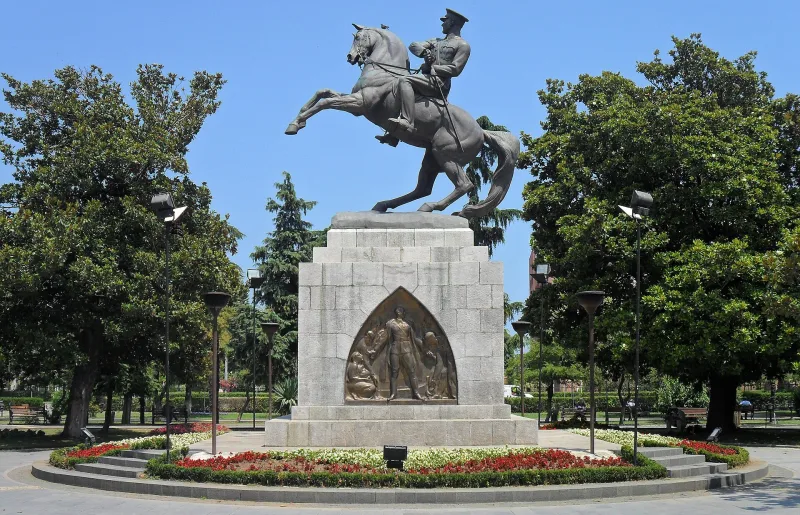
In the Black Sea city of Samsun, in the İlkadım district, on Cumhuriyet Meydanı square, stands an equestrian monument that has become one of the iconic symbols of the Republic of Turkey. Onur Anıtı, or the “Monument of Honor,” depicts Mustafa Kemal Atatürk riding a rearing horse upon his arrival in Samsun on May 19, 1919. It is from this date that Turkish historiography counts the beginning of the War of Independence, and every May 19, the country celebrates it as the national holiday “Atatürk, Youth, and Sports Day.”

History

On May 19, 1919, Mustafa Kemal Pasha disembarked from the steamship Bandırma at the port of Samsun, carrying an official mandate from the Ottoman government to inspect military units. In reality, this step marked the launch of the national resistance movement, which over the course of four years led to the establishment of the Republic of Turkey. The date of the landing in Samsun is considered the official start of the War of Independence.

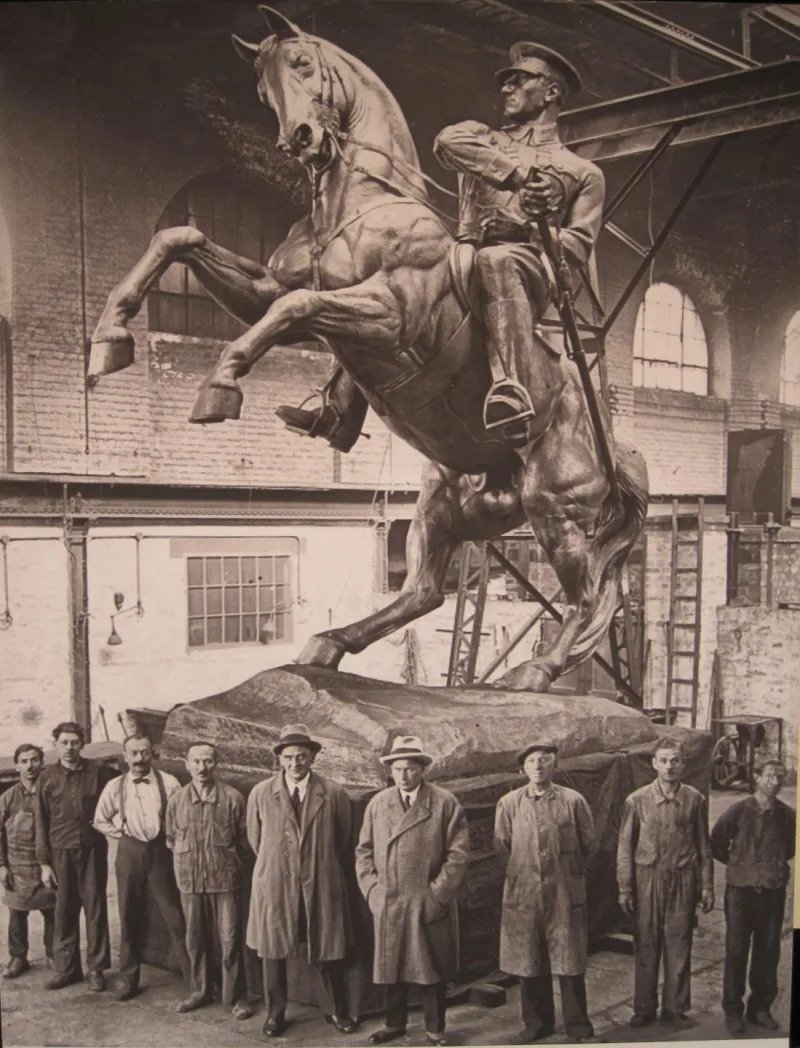
In 1927, the city authorities of Samsun commissioned a memorial monument. Following an international competition, the commission was awarded to the Austrian sculptor Heinrich Krippel—who had also created the first equestrian statue of Atatürk in Ankara. Krippel completed the work in Vienna from 1928 to 1931. The bronze was cast in an Austrian foundry from 32 separate parts. The finished monument was shipped via Hamburg to Samsun on October 15, 1931.

The statue was officially installed on October 29, 1931, on Republic Day, and the grand opening took place on January 15, 1932, with the participation of city officials and the public. It was the thirteenth monument to Atatürk in Turkey and Krippel’s fourth work in the country. The total cost amounted to approximately $37,000 at the time, with the sculptor’s fee being $5,500.

What to see

Equestrian composition

The central figure is Atatürk in military uniform, riding a rearing horse. The horse’s pose and the rider’s lean convey energy and determination, capturing the moment just before the jump. The bronze figure itself is 4.75 meters tall; the total height of the monument, including the granite pedestal, reaches 8.85 meters. The silhouette is visible from various points in the city center.

Pedestal and Reliefs

Bas-reliefs depicting scenes from the national liberation movement are installed at the base of the monument: soldiers, flags, and crowds of citizens greeting Atatürk. This is a standard feature of early Republican monumentalism—scenes of collective heroism at the foot of the leader’s figure.

Square and Context

The monument stands in Atatürk Park, at the intersection of Samsun’s main streets. It is surrounded by wide avenues, benches, and views of the Black Sea. Cumhuriyet Square is the venue for major city events, especially on May 19, when parades and celebrations take place here.

Interesting Facts

  • Sculptor Heinrich Krippel was an Austrian master who specialized in monumental bronze. Before working on the Onur Anıtı, he created the first equestrian monument to Atatürk in Ankara in 1927.
  • The bronze for the statue was cast in Vienna from 32 separate pieces and transported to Samsun via the port of Hamburg on a special cargo ship.
  • The total height of the monument is 8.85 meters, of which 4.75 meters are accounted for by the bronze figure of the horse and rider.
  • The cost of the work amounted to about $37,000 in the early 1930s—a significant sum for a provincial city, reflecting the importance of the memorial.
  • The date of Atatürk’s landing in Samsun (May 19, 1919) has been officially celebrated in Turkey since 1981 as “Atatürk’ü Anma, Gençlik ve Spor Bayramı”—the Festival of Remembrance of Atatürk, Youth, and Sports.

How to get there

The monument is located in the center of Samsun, in the İlkadım district, in Atatürk Park, at the intersection of the city’s main avenues. GPS coordinates: 41.2891° N, 36.3365° E. From Samsun-Çarşamba Airport (SZF)—about 25 km along Highway D-010 (approximately 30 minutes by taxi).

Within the city limits, the monument is within walking distance of the central bus station and the Black Sea waterfront. Direct buses run to Samsun from Ankara (about 7 hours), Istanbul (about 10 hours), and Trabzon (about 5 hours). The new Samray tram line runs through the center and has a stop at Cumhuriyet Meydanı.

Tips for travelers

The best time to visit is in the morning, when the light from the east highlights the sculpture’s form, or in the late evening when it is illuminated. On May 19, expect celebrations, parades, and large crowds—arrive early if you want a good spot for photos.

A full tour of the monument and the square takes about 30 minutes. Combine your visit with a walk along the Black Sea promenade, a visit to the Bandırma museum ship (an exact replica of the vessel on which Atatürk arrived in Samsun), and the Samsun Archaeological Museum. This will give you a complete picture of what this date meant for Turkey.

Choose neutral clothing for photos—against the backdrop of dark bronze and gray granite, warm tones work better than cool ones. And remember: for Turks, this is not just a monument, but a historical symbol. You should behave appropriately at the base, without loud conversations or frivolous poses for photos.
Your comfort is important to us, click on the desired marker to create a route.
Meeting for minutes before
Yesterday. 17:48
Frequently asked questions — Statue of Honor (Onur Anıtı) — a statue of Atatürk on horseback in Samsun Answers to frequently asked questions about Statue of Honor (Onur Anıtı) — a statue of Atatürk on horseback in Samsun. Information about the service's operation, capabilities, and use.
The Onur Anıtı (“Monument of Honor”) is a bronze equestrian statue in Samsun depicting Mustafa Kemal Atatürk on a rearing horse at the moment of his landing in the city on May 19, 1919. It is from this date that Turkish historiography marks the beginning of the War of Independence and the subsequent establishment of the Republic of Turkey.
The monument was created by Austrian sculptor Heinrich Krippel, who specialized in monumental bronze works. He won an international competition in 1927. The work was carried out in Vienna from 1928 to 1931; the bronze was cast in an Austrian workshop from 32 separate parts, after which the monument was shipped via Hamburg to Samsun. Krippel also created the first equestrian statue of Atatürk in Ankara.
The monument was delivered to Samsun on October 15, 1931. It was erected on October 29, 1931—Republic Day. The grand opening, attended by city officials and the public, took place on January 15, 1932. It was the thirteenth monument to Atatürk in Turkey and the fourth work by Heinrich Krippel in the country.
The bronze statue of a horseman on horseback stands 4.75 meters tall. The total height of the monument, including the granite pedestal, is 8.85 meters. As a result, the monument’s silhouette is visible from various points throughout downtown Samsun.
The total cost of the monument was approximately $37,000 in the early 1930s—a significant sum for a provincial town at that time. Sculptor Heinrich Krippel was paid a fee of $5,500. The monument was commissioned by the municipal authorities of Samsun.
On May 19, 1919, Mustafa Kemal Pasha landed at the port of Samsun on an official inspection mission; however, in reality, it was this very step that sparked the national resistance movement. Since 1981, this day has been officially celebrated in Turkey as “Atatürk’ü Anma, Gençlik ve Spor Bayramı”—the Commemoration of Atatürk, Youth, and Sports Day. Parades and solemn ceremonies are held at the monument in Cumhuriyet Meydanı.
The base of the monument features bas-reliefs depicting scenes from the national liberation movement: soldiers, flags, and crowds of citizens greeting Atatürk. This is a characteristic feature of early Republican monumentalism—scenes of collective heroism at the feet of the central figure of the leader.
Just a short walk from the Onur Monument are the Black Sea promenade and the Bandırma Museum Ship—an exact replica of the vessel on which Atatürk arrived in Samsun in 1919. A visit to the Samsun Archaeological Museum is also highly recommended. Together, these three sites offer a comprehensive overview of the city’s historical significance.
The morning light from the east highlights the sculptural forms of the bronze figure. In the evening, the monument looks spectacular under artificial lighting. Against the backdrop of dark bronze and gray granite, warm-toned clothing looks more appealing than cool tones. On the holiday of May 19, it’s best to arrive early, as the square fills up with people.
For Turks, the Onur Monument is not just a tourist attraction, but a historical and national symbol. At the foot of the monument, it is customary to behave with restraint: avoid loud conversations and frivolous poses for photos. This is especially important on days when official events are held.
The best time to visit is in the spring and fall, when the weather on the Black Sea coast is most pleasant for walking. If you want to attend the commemorative ceremonies at the monument, come on May 19 or October 29 (Republic Day). In summer, Samsun can be hot and humid, and in winter, it can be cold and rainy.
User manual — Statue of Honor (Onur Anıtı) — a statue of Atatürk on horseback in Samsun Statue of Honor (Onur Anıtı) — a statue of Atatürk on horseback in Samsun User Guide with a description of the main functions, features, and principles of use.
Decide on your travel dates: if you want to see the celebrations at the monument, choose May 19 or October 29. On regular days, the monument is open 24 hours a day. Plan to spend at least half a day in downtown Samsun—in addition to the monument itself, there’s a waterfront promenade, the Bandırma museum ship, and the Archaeological Museum nearby.
There are direct buses from Istanbul to Samsun (about 10 hours), and flights are available to Samsun-Çarşamba Airport (SZF). The bus ride from Ankara takes about 7 hours, and from Trabzon, about 5 hours. Upon arrival at SZF Airport, the city center is approximately 25 km away via Highway D-010; a taxi ride takes about 30 minutes.
The Onur Monument is located in Atatürk Park in the central district of İlkadım, on Cumhuriyet Square. The new Samray tram line runs through the city center and has a stop right next to the square. The monument is also within walking distance of the central bus station and the Black Sea waterfront. GPS: 41.2891° N, 36.3365° E.
Start with a general view of the monument from different points around the square—the 8.85-meter-tall silhouette is clearly visible from a distance. Step closer to examine the details of the bronze figure: the rearing horse’s posture, the rider’s military uniform, and the dynamic flow of the entire composition. Then carefully examine the bas-reliefs on the pedestal depicting scenes from the War of Independence.
To fully appreciate the historical significance of May 19, 1919, head to the waterfront and explore the Bandırma museum ship—an exact replica of the vessel on which Atatürk arrived in Samsun. Afterward, visit the Samsun Archaeological Museum to gain a broader historical perspective on the region.
In the morning, the light streams in from the east and highlights the sculpture’s form—this is the best time for detailed photography. In the evening, the lighting comes on, creating a striking contrast against the dark sky. Choose clothing in warm tones—it stands out better against the dark bronze and gray granite of the pedestal.